
Relationship & Attachment

Maybe you find yourself giving more than you receive, overthinking how others feel about you, or struggling to set boundaries without feeling guilty.
Perhaps you crave closeness but pull away when someone gets too close. Or maybe you've noticed that the same patterns keep showing up in your relationships, even when you try to do things differently.
Sometimes, these experiences are connected to past relationships, childhood experiences, or the ways we've learned to protect ourselves from getting hurt.
You don't have to keep navigating these patterns on your own.
You deserve relationships where you can feel safe being yourself

Why do I keep finding myself in the same patterns?
Our relationships don't exist in isolation. The ways we learned to experience love, connection, safety, and belonging can influence how we relate to ourselves and others today.
Sometimes, patterns that once helped us feel safe or connected can begin to leave us feeling stuck.
Maybe you've noticed yourself:
Overthinking conversations or worrying that someone is upset with you.
Seeking reassurance but struggling to feel secure, even when you receive it.
Putting other people's needs ahead of your own to avoid conflict or disappointment.
Struggling to set boundaries without feeling selfish or guilty.
Pulling away when relationships become emotionally close or vulnerable.
Feeling responsible for other people's emotions or the success of a relationship.
Questioning your worth or feeling like you have to earn love and acceptance.
These patterns don't mean there's something wrong with you. Often, they reflect ways you've learned to navigate relationships and protect yourself.
And while those patterns may have served a purpose at one point, they don't have to define how you experience connection moving forward.
Questions you might be sitting with
-
Sometimes, we find ourselves repeating patterns even when we're aware of them and genuinely want things to be different.
These patterns may be connected to early relationships, past experiences, or the ways we've learned to seek connection and protect ourselves from rejection or hurt.
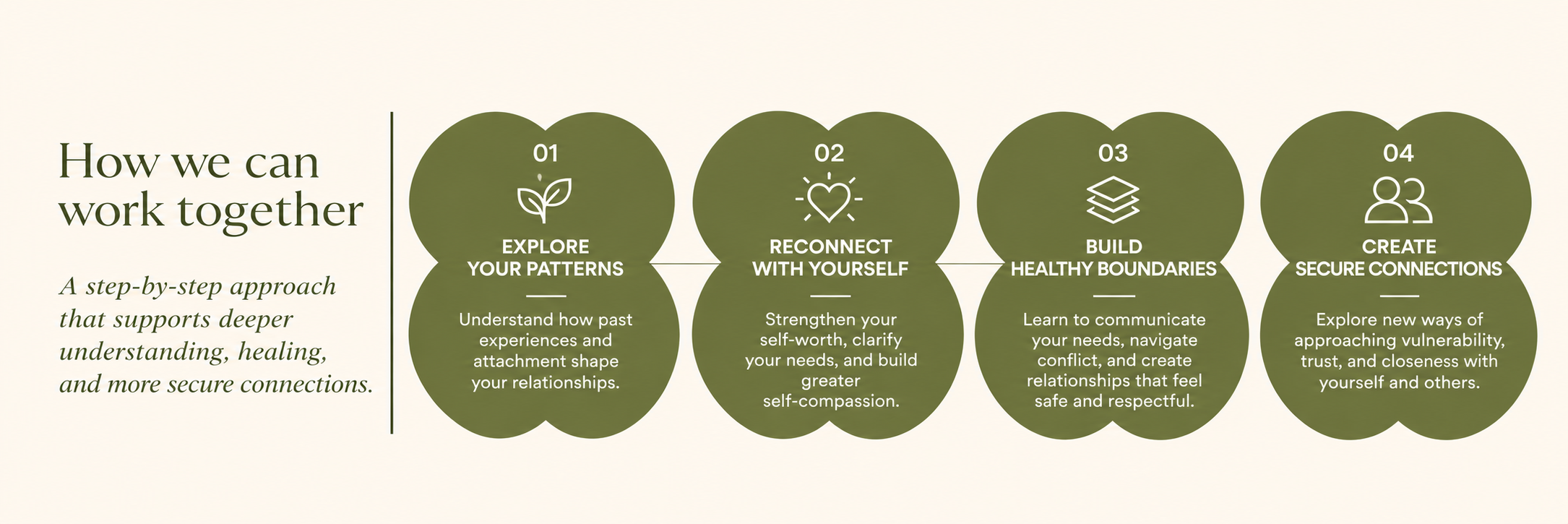
In therapy, we can explore what's happening beneath these patterns, understand the needs they may be trying to meet, and begin developing different ways of responding.
The goal isn't to blame yourself or the people who shaped your experiences. It's to build awareness, compassion, and greater freedom in how you approach relationships.
-
Attachment refers to the ways we experience emotional connection, closeness, and security in relationships.
You may have heard terms like anxious, avoidant, disorganized, or secure attachment. These can be helpful frameworks for understanding why you might seek reassurance, fear abandonment, struggle with vulnerability, or feel uncomfortable depending on others.
However, attachment styles aren't fixed identities or permanent labels.
Together, we can explore how your attachment experiences influence your relationships and work toward developing greater emotional security, trust, and flexibility.
-
Absolutely. Our earliest relationships can influence how we understand love, safety, trust, boundaries, and our own worth.
Maybe you grew up feeling responsible for other people's emotions, learned to avoid conflict, or felt that love and acceptance depended on meeting certain expectations.
These experiences can shape how you respond to closeness, rejection, and vulnerability as an adult.
Therapy can help us gently explore these connections, make sense of the beliefs and protective patterns you've developed, and create space for new ways of relating.
-
Self-esteem isn't always about how confident you appear on the outside. You might be successful, independent, and capable, yet still struggle with self-doubt, people-pleasing, or feeling like you're never quite enough.
Sometimes, our sense of worth becomes closely tied to how others perceive us, whether we're meeting expectations, or how well our relationships are going.
In therapy, we can explore where these beliefs come from, challenge the expectations you've placed on yourself, and strengthen your ability to recognize your needs, values, and worth outside of other people's approval.
-
Past experiences of emotional neglect, rejection, abandonment, betrayal, or unhealthy relationship dynamics can affect how safe we feel connecting with others.
You might find yourself anticipating rejection, struggling to trust, becoming overwhelmed during conflict, or feeling disconnected from your own needs.
Healing doesn't necessarily mean forgetting what happened or forcing yourself to trust again.
Our work can focus on understanding how those experiences continue to affect you, developing ways to feel more emotionally grounded, and gradually building a stronger sense of safety, choice, and connection.
-
Of course!
Relationship counselling isn't only for people who are currently dating or partnered. Our relationships with family, friends, colleagues, and ourselves can be just as meaningful.
You might want to understand patterns from past relationships, work through a breakup, strengthen your boundaries, or explore why certain connections feel particularly difficult.
Therapy can offer space to better understand yourself and develop healthier ways of relating, regardless of your relationship status.
-
My approach is warm, collaborative, and rooted in understanding how our relationships and past experiences shape the way we see ourselves and connect with others.
I primarily draw from attachment-based therapy, Emotionally Focused Therapy (EFT), and psychodynamic approaches, alongside narrative and trauma-informed practices.
Together, we can explore the deeper emotional experiences beneath recurring patterns, understand how past relationships may influence your responses today, and develop greater awareness of your needs and boundaries.
I also incorporate practical strategies to support emotional regulation, communication, self-compassion, and healthier relationship dynamics.
There's no one-size-fits-all approach. Our work will be tailored to your experiences, needs, and goals.
-
Sometimes! While much of our work happens during sessions, meaningful change can also happen in everyday moments.
Depending on your needs, I may suggest reflection questions, journaling prompts, communication exercises, or small practices to help you recognize patterns, strengthen boundaries, and reconnect with yourself.
These are always collaborative and tailored to what feels helpful and manageable for you.
There's no pressure to get everything right. Therapy is a space for curiosity and growth, not another place where you have to meet expectations.
-
Couples counselling isn't just for relationships in crisis. Sometimes, it's about understanding each other more deeply, navigating recurring disagreements, or finding ways to feel more connected.
Maybe you've noticed that the same arguments keep coming up, you're struggling to communicate your needs, or life has gotten so busy that you've started feeling more like roommates than partners.
Drawing from attachment-based approaches and Emotionally Focused Couples Therapy (EFCT), we'll explore the patterns that show up between you, better understand the emotions and needs beneath them, and work toward healthier ways of communicating and connecting.
You don't have to wait until something goes wrong to invest in your relationship. Whether you're navigating challenges or simply wanting to grow together, couples counselling can offer a space to strengthen your connection.
You deserve relationships where you don't have to lose yourself.
You don’t have to minimize what happened, rush to feel better, to have everything figured out. We can start exactly where you are.